FemiCore - Natural Bladder Support for Women Through Microbiome Balance

Why FemiCore Is Getting Attention in 2026
If you’ve spent any time researching natural solutions for recurring UTIs, overactive bladder, or feminine microbiome imbalance, you’ve likely come across the name FemiCore.
The FemiCore supplement has been drawing attention in the women’s health space — not because of flashy marketing, but because it takes a fundamentally different approach from nearly every other product in this category. Where most bladder health supplements rely on cranberry extract or a single probiotic strain, FemiCore is built around a multi-strain microbiome restoration protocol backed by peer-reviewed research.
But does it actually work? Is the science behind it solid? And is FemiCore worth buying — or is it just another supplement making promises it can’t keep?
In this complete FemiCore review, we cover everything: what the supplement contains, how it works, what the clinical research says, what results you can realistically expect, and who it’s most likely to help. By the end, you’ll have everything you need to make an informed decision about whether to buy FemiCore for yourself.

What Is FemiCore?
FemiCore is a daily dietary supplement designed specifically for women experiencing recurring urinary tract infections, overactive bladder, bladder leaks, and related feminine microbiome imbalances. It is manufactured and sold through the official FemiCore website at fmicore.com.
The core premise of the FemiCore supplement is straightforward: the most common conventional treatments for these conditions — antibiotics, cranberry supplements, D-Mannose, prescription OAB medications — treat symptoms rather than the underlying cause. They provide temporary relief, but they don’t restore the protective bacterial ecosystem that prevents these problems from developing in the first place.
FemiCore addresses that root cause directly. Its formula combines five clinically-studied Lactobacillus probiotic strains with four synergistic botanical extracts to restore the urinary and vaginal microbiome to a state where it can defend itself naturally — the way a healthy microbiome is supposed to.
The result, according to both the clinical research the formula is based on and the experiences of women who have used it, is not a temporary fix but a genuine restoration of the conditions that prevent recurring bladder issues from happening at all.
The Root Cause That FemiCore Addresses
To understand why the FemiCore supplement works the way it does, it helps to understand the underlying biology it’s targeting.
The Urinary Microbiome Connection
In 2020, researchers published groundbreaking findings in the American Journal of Obstetrics and Gynecology comparing the bacterial ecosystems of women with healthy bladder control against women experiencing urinary incontinence and recurring infections. The findings were clear: women with bladder problems had fundamentally different bacterial communities in their urinary and vaginal tracts.
The protective Lactobacillus strains that should have been dominant — particularly Lactobacillus crispatus — were barely present. Harmful bacteria that should have been kept in check were thriving. And critically, the women who had received the most antibiotic treatment showed the most severe depletion of protective bacteria.
This research confirmed what the FemiCore development team had suspected: the conventional approach to recurrent UTIs and bladder control problems was creating a vicious cycle. Antibiotics clear infections in the short term. But they also eliminate the protective Lactobacillus bacteria that prevent infections from occurring in the first place. The result is a weaker microbiome after every treatment, which is why women who once got a UTI once a year start getting one every few months.
Why Conventional Treatments Fall Short
Each conventional treatment addresses one aspect of the problem:
- Antibiotics kill harmful bacteria — but they also eliminate protective Lactobacillus strains, leaving the microbiome weaker than before
- Cranberry supplements prevent bacterial adhesion — but most products don’t contain enough of the active compound (proanthocyanidins) to produce a clinically meaningful effect
- D-Mannose flushes bacteria out — but does nothing to rebuild the protective ecosystem that prevents re-infection
- Prescription OAB medications force the bladder muscle to relax — treating the symptom chemically without addressing what’s causing the hyperactivity
- Generic probiotics support gut health — but use strains that don’t effectively colonize the vaginal or urinary tract
FemiCore was designed to address what all of these approaches miss: restoring the protective Lactobacillus ecosystem that makes all other defenses possible.
FemiCore Ingredients: The Full Formula
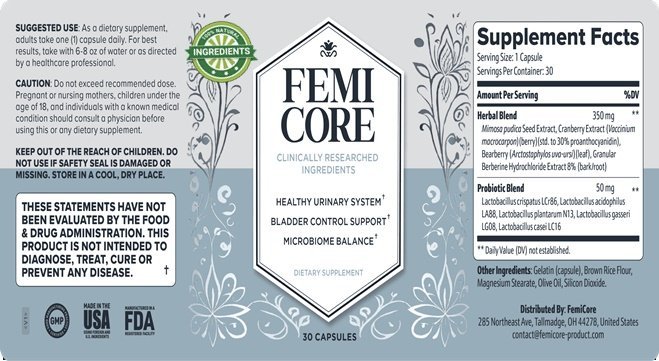
The FemiCore supplement contains 9 active ingredients — five probiotic strains and four botanical extracts. Each ingredient was selected based on published research showing its specific role in urinary and vaginal microbiome health. This is not a formula padded with filler ingredients at negligible doses; every component serves a distinct, non-redundant purpose.
The 5 Lactobacillus Strains
Lactobacillus Crispatus
The most important ingredient in the FemiCore formula. L. crispatus is the dominant protective strain in a healthy vaginal and urinary microbiome. It produces lactic acid — which maintains the optimal pH range of 3.8 to 4.5 — and hydrogen peroxide, which creates an antimicrobial environment that is inhospitable to pathogens like E. coli. Research consistently shows that women with higher L. crispatus dominance have significantly lower rates of UTIs and urinary incontinence. When this strain is depleted, every other layer of microbiome defense begins to fail.
Lactobacillus Acidophilus
L. acidophilus bridges the gut-vaginal axis — the biological connection between gut microbiome health and vaginal flora stability. Because the gut and vaginal microbiomes share bacterial populations that migrate between compartments, gut-level disruption directly affects urinary health. L. acidophilus crowds out pathogenic bacteria at a systemic level, supports immune function, and has been clinically shown to prevent E. coli colonization in the urinary tract.
Lactobacillus Plantarum
Among the most acid-tolerant Lactobacillus strains available, L. plantarum survives stomach acid transit in significantly higher numbers than most probiotic strains — meaning more active colonies reach the intestinal tract where they’re needed. A 2022 clinical study demonstrated that L. plantarum supplementation significantly reduced both the frequency and severity of recurrent UTIs, with participants experiencing notably longer infection-free intervals.
Lactobacillus Gasseri
Specifically studied for its ability to colonize the vaginal tract and produce bacteriocins — natural antimicrobial compounds that inhibit competing pathogens — L. gasseri works synergistically with L. crispatus to maintain the acidic protective environment. Research shows strong inhibitory activity against Candida albicans, Gardnerella vaginalis, and uropathogenic E. coli, making it particularly valuable for women dealing with both UTI and bacterial vaginosis.
Lactobacillus Casei
The resilience strain. L. casei enhances the production of secretory IgA — the antibody lining the mucosal surfaces of the urinary and vaginal tract — and promotes microbiome diversity. Its primary function is maintaining equilibrium when the microbiome is challenged by stress, dietary changes, hormonal fluctuation, or antibiotic exposure, preventing the kind of collapse that triggers another infection cycle.
The 4 Botanical Extracts
Cranberry Extract (Standardized Proanthocyanidins)
FemiCore uses a concentrated cranberry extract standardized for proanthocyanidins (PACs) — the compounds responsible for preventing E. coli from adhering to the walls of the urinary tract. The critical word is “standardized”: most cranberry supplements, including juice products, don’t contain sufficient PAC concentrations to produce a clinically meaningful anti-adhesion effect. A Cochrane Review of cranberry for UTI prevention found statistically significant results only with standardized PAC extracts at clinical doses — which is what FemiCore uses.
Bearberry (Uva Ursi)
Bearberry contains arbutin, which converts to hydroquinone in the urinary tract where it exerts direct antimicrobial activity against common UTI pathogens including E. coli, Staphylococcus aureus, and Proteus mirabilis. While cranberry prevents bacterial adhesion, bearberry inhibits bacterial growth once bacteria are present — two complementary mechanisms that together provide more comprehensive urinary protection than either could alone.
Granular Berberine
The most pharmacologically distinct ingredient in the FemiCore formula, berberine addresses a mechanism no other ingredient touches: bladder muscle regulation. Research in the Journal of Ethnopharmacology demonstrates that berberine modulates neurogenic contractile response in the bladder detrusor muscle — the involuntary smooth muscle whose hyperactivity causes urgency, frequency, and bladder leaks. Berberine also selectively inhibits pathogenic bacteria while supporting Lactobacillus growth, making it doubly relevant to the formula’s microbiome goals. The “granular” formulation improves bioavailability over standard berberine, which has notoriously poor absorption in conventional capsule form.
Mimosa Pudica
Addresses the gut-vaginal microbiome axis — the connection between gut health and urinary and vaginal microbiome stability that most feminine supplements ignore entirely. Mimosa pudica supports intestinal integrity and the systemic internal environment in which the five probiotic strains can colonize and persist throughout the entire urogenital system. Without adequate gut microbiome support, even well-chosen probiotic strains can be undermined by systemic dysbiosis.
FemiCore Ingredients: The Full Formula
The pattern in FemiCore customer reviews is remarkably consistent: skepticism at first, gradual improvement over weeks 3–5, and significant changes in bladder control and UTI frequency by weeks 6–8.
Women who review the FemiCore supplement most frequently mention:
- Relief from the constant urgency that had been affecting their quality of life — the inability to sit through meetings, travel, or social occasions without anxiety about bathroom access
- Breaking the recurring UTI cycle after months or years of antibiotic treatment that worked temporarily but never solved the underlying problem
- Improvement in overall feminine comfort and reduction in the discomfort that often precedes a UTI
- The gradual, consistent nature of the improvement — not a dramatic overnight change, but a steady restoration that feels sustainable
The most common criticism is impatience during weeks one through three, before the probiotic colonization phase produces noticeable results. Women who stopped during this window typically did not experience the full benefit of the formula.
FemiCore vs. Other Bladder Health Supplements: Direct Comparison
When considering whether to buy FemiCore, it’s reasonable to ask how it compares to alternatives.
✅ FemiCore vs. Standard Cranberry Supplements: Cranberry supplements address one mechanism — bacterial adhesion prevention. FemiCore includes clinical-strength cranberry extract and adds five probiotic strains plus three additional botanicals. The difference is between treating one pathway and restoring the entire protective ecosystem.
✅ FemiCore vs. D-Mannose: D-Mannose works by binding to bacteria and facilitating their elimination through urination. Like cranberry, it addresses one mechanism and provides no microbiome restoration. FemiCore addresses the root cause that makes D-Mannose necessary in the first place.
✅ FemiCore vs. Generic Probiotic Supplements: This is perhaps the most important comparison. Generic probiotics use gut-health strains — primarily Lactobacillus rhamnosus and various Bifidobacterium species — that are excellent for digestion but do not effectively colonize the vaginal or urinary tract. FemiCore uses strains specifically selected and studied for their role in the vaginal and urinary microbiome. The strains matter enormously; using the wrong ones for this application produces no meaningful benefit.
✅ FemiCore vs. Prescription OAB Medications: Prescription medications like oxybutynin force the bladder muscle to relax chemically. They treat the symptom of urgency without addressing the microbiome imbalance causing the hyperactivity. FemiCore’s berberine component addresses bladder muscle function through a natural mechanism while simultaneously restoring the microbiome — addressing both the symptom and the root cause.
Who Is FemiCore Supplement Best Suited For?
Based on the formula’s design and the clinical research it’s based on, FemiCore is likely to be most effective for:
✅ Women with recurring UTIs — particularly those who have been through multiple antibiotic courses and find infections return within weeks or months. The antibiotic cycle itself is depleting the protective Lactobacillus that prevents re-infection, and FemiCore is specifically designed to break this cycle.
✅ Women with overactive bladder symptoms — urgency, frequency, and leaks driven by bladder muscle hyperactivity. Berberine’s direct effect on the detrusor muscle addresses this mechanism, while microbiome restoration addresses the dysbiosis that contributes to bladder inflammation.
✅ Women experiencing post-antibiotic microbiome depletion — the period immediately after completing an antibiotic course is actually an ideal time to start FemiCore, because the protective Lactobacillus flora is at its most depleted and needs urgent rebuilding to prevent the next infection cycle.
✅ Women who have tried single-mechanism supplements without lasting results — if cranberry, D-Mannose, and generic probiotics have provided only temporary relief, that’s evidence the root cause isn’t being addressed. FemiCore’s multi-mechanism approach is designed precisely for this situation.
FemiCore is not appropriate for treating an active UTI. If you currently have an active infection — burning urination, fever, cloudy or bloody urine — see your doctor immediately. FemiCore is a preventative and restorative formula, not an acute treatment.
How to Use FemiCore Supplement Correctly
Getting the most from FemiCore requires consistency and realistic expectations about timing.
✅ Dosage: One capsule every morning, taken with a glass of water and ideally with breakfast. Food helps buffer the probiotic strains through stomach acid, improving survival rates and colonization success.
✅ Consistency: Don’t skip days during the first month. Lactobacillus strains need regular introduction to establish stable colonization, especially during the initial period when your microbiome is still imbalanced.
✅ Duration: Most women take FemiCore daily for three to six months to fully restore microbiome resilience and break the recurring infection pattern. After that, some continue as daily maintenance, some reduce to three to four times per week, and some stop entirely — resuming only if symptoms return.
✅ Important antibiotic interaction: If you are currently taking antibiotics for a UTI, wait until you have finished the full course before starting FemiCore. Antibiotics kill bacteria indiscriminately — they cannot distinguish between harmful pathogens and the beneficial probiotic strains in the formula. Start FemiCore once the antibiotic course is complete, when your protective flora is most depleted and most in need of rebuilding.
Where to Buy FemiCore: Official Source Only
FemiCore is sold exclusively through the official website. It is not available on Amazon, in pharmacies, or through third-party retailers.
Where to buy FemiCore: getfemicore.com — the only authorized source.
Purchasing through the official FemiCore website ensures you receive the authentic formula, current batch freshness, full 60-day money-back guarantee coverage, and access to customer support. Third-party listings for FemiCore on marketplace sites cannot be verified as authentic and are not covered by the manufacturer’s guarantee.
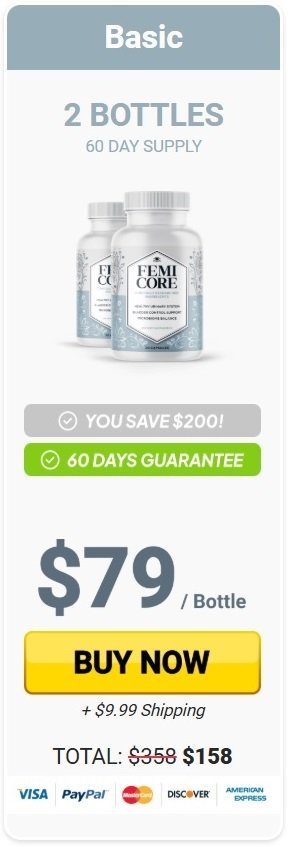
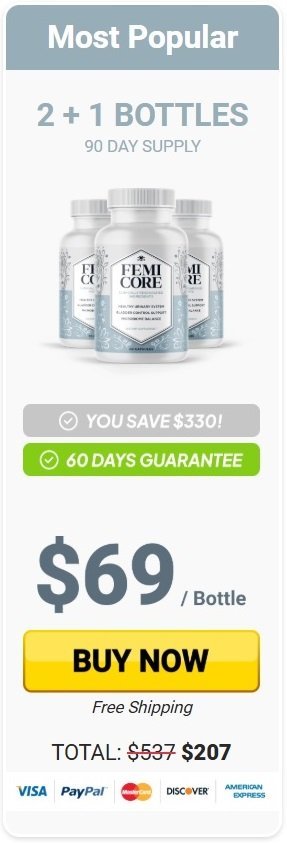
When you buy FemiCore through the official site, the order process is straightforward: select your package, complete checkout, and the supplement ships directly to you with free shipping on three or more bottles.
FemiCore Money-Back Guarantee: What You Need to Know
Every FemiCore purchase is protected by a 60-day money-back guarantee. This is not a 30-day window — it is specifically 60 days because FemiCore’s development team understands that microbiome restoration takes time. Most women don’t experience the full effect of the formula until weeks four through eight of consistent use. A 30-day guarantee would not give the formula enough time to actually work.
Under the guarantee: if you don’t notice meaningful improvement in bladder control, if your UTI pattern doesn’t change, or if you simply don’t feel better after two months of consistent daily use — contact the FemiCore support team for a full refund. No complicated forms, no demanding explanations, no conditions.
The guarantee exists because the development team is confident in what they built. If FemiCore doesn’t restore your urinary microbiome balance and improve your bladder health, you shouldn’t pay for it.
FemiCore FAQ: Common Questions Answered
How long before FemiCore works? Most women start noticing changes around week three to four. Significant improvement in bladder control and UTI frequency typically becomes clear by week six to eight. The 60-day guarantee covers you if you see no improvement by that point.
Can I take FemiCore while on antibiotics? No. Wait until your antibiotic course is complete. Antibiotics will kill the probiotic strains before they can colonize. Once you finish antibiotics, starting FemiCore immediately is actually ideal — your protective flora is at its most depleted.
Is FemiCore safe for long-term use? Yes. The Lactobacillus strains and botanical ingredients have been used safely in clinical studies for extended periods. These are organisms that naturally inhabit the body. Consult your healthcare provider if you take medications for blood sugar or blood pressure, or if you are pregnant or nursing.
Does FemiCore treat active UTIs? No. For an active infection, see your doctor. FemiCore is a preventative and restorative supplement, not an acute treatment.
Why is FemiCore more expensive than basic cranberry supplements? Because the formula is fundamentally different. Clinical-grade standardized extracts, multiple viable probiotic strains at effective colonization doses, and a formula developed over 14 months of research cost more to produce than a single-ingredient supplement. The comparison isn’t meaningful — they’re addressing different things at different levels.
How many bottles should I order? We recommend at least a three-month supply. The most significant improvements occur around weeks six to eight, and having an uninterrupted supply through that period matters significantly for results. The three-bottle package also offers substantially better value per bottle than the two-bottle option.
Final Verdict: Is FemiCore Worth Buying?
After reviewing the clinical research behind its formulation, analyzing each of its nine ingredients, and examining the pattern of user experiences, the FemiCore supplement stands out as one of the most scientifically coherent and well-constructed products in the feminine microbiome health space.
It is not a quick fix. It will not resolve an active UTI. And it requires a commitment of six to eight weeks before the full restoration mechanism has time to work.
But for women who have been cycling through antibiotics, trying one single-ingredient supplement after another, and finding that nothing produces lasting results, FemiCore’s approach addresses the actual reason nothing has worked: the root cause is urinary microbiome imbalance, and the only way to break the cycle is to restore the protective Lactobacillus ecosystem that prevents infections and maintains bladder control in the first place.
That is exactly what the FemiCore supplement is designed to do. The formula is grounded in published research, the ingredient selection is clinically justified, and the 60-day guarantee means there is no financial risk in trying it.
If you’re ready to address the root cause rather than manage the next episode, FemiCore is the supplement designed specifically for that goal.